Turning Learning into Real-Life Application
TYPE
Capstone Project
DURATION
6 Months
(Sep – Dec '24, Jan – Feb '25)
TEAM
Research: With 3 designers
Design: Individual work
OVERVIEW
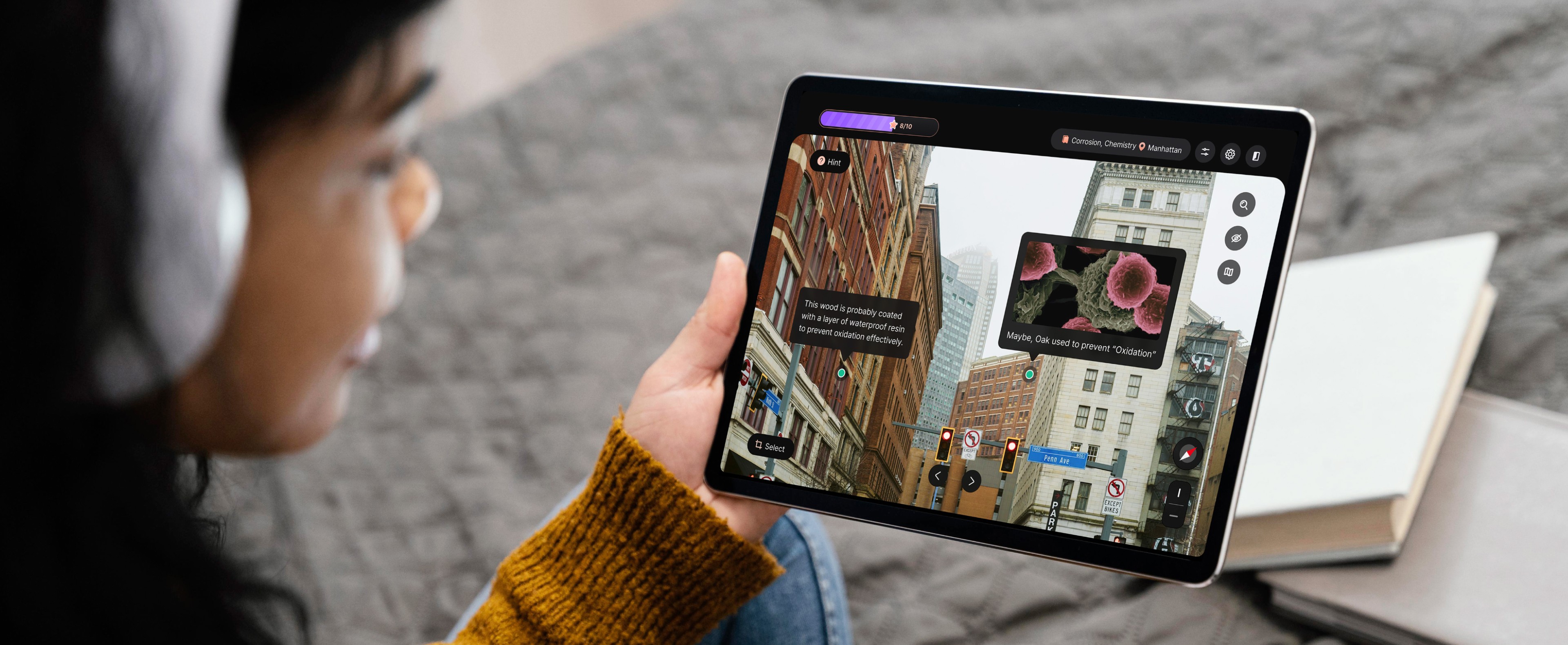
'Scopin' is an educational platform with a virtual map. It aimed at helping students to connect newly acquired knowledge to real-world scenarios beyond textbooks and lectures.
MY ROLE
Led the end-to-end design process, contributing Background research, In-depth interview, Online survey, Research analysis, UX/UI Design, Wireframes, and Prototyping.
How might we help students, aged 8 to 15, practically apply what they learn to their daily lives?
01
Explore what knowledge to learn
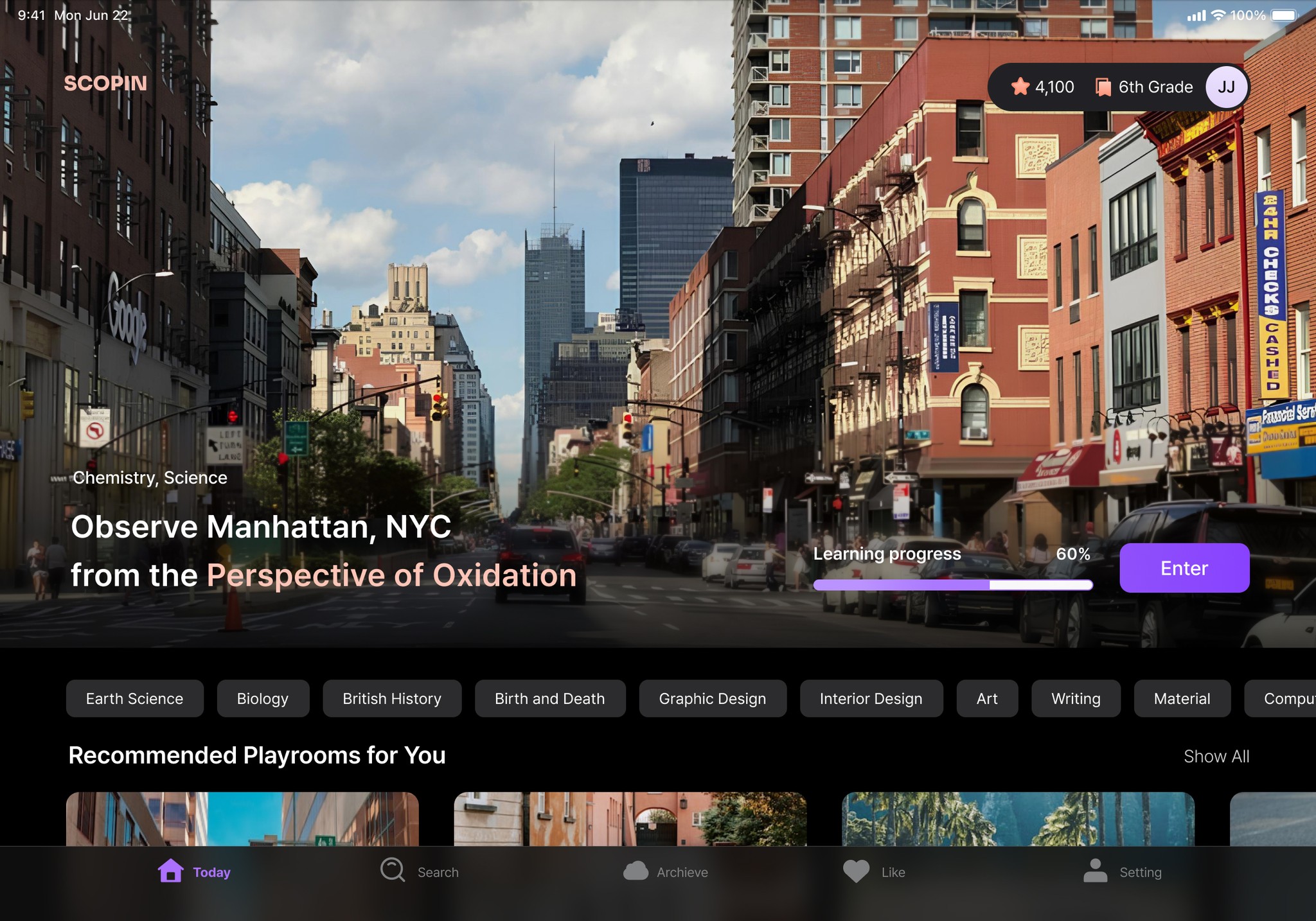
On the home screen, you can first see their progress in knowledge they are currently learning. If the learning is finished, the service suggests the next learning. By scrolling down, you can also explore various knowledge.
02
Acquire New Knowledge
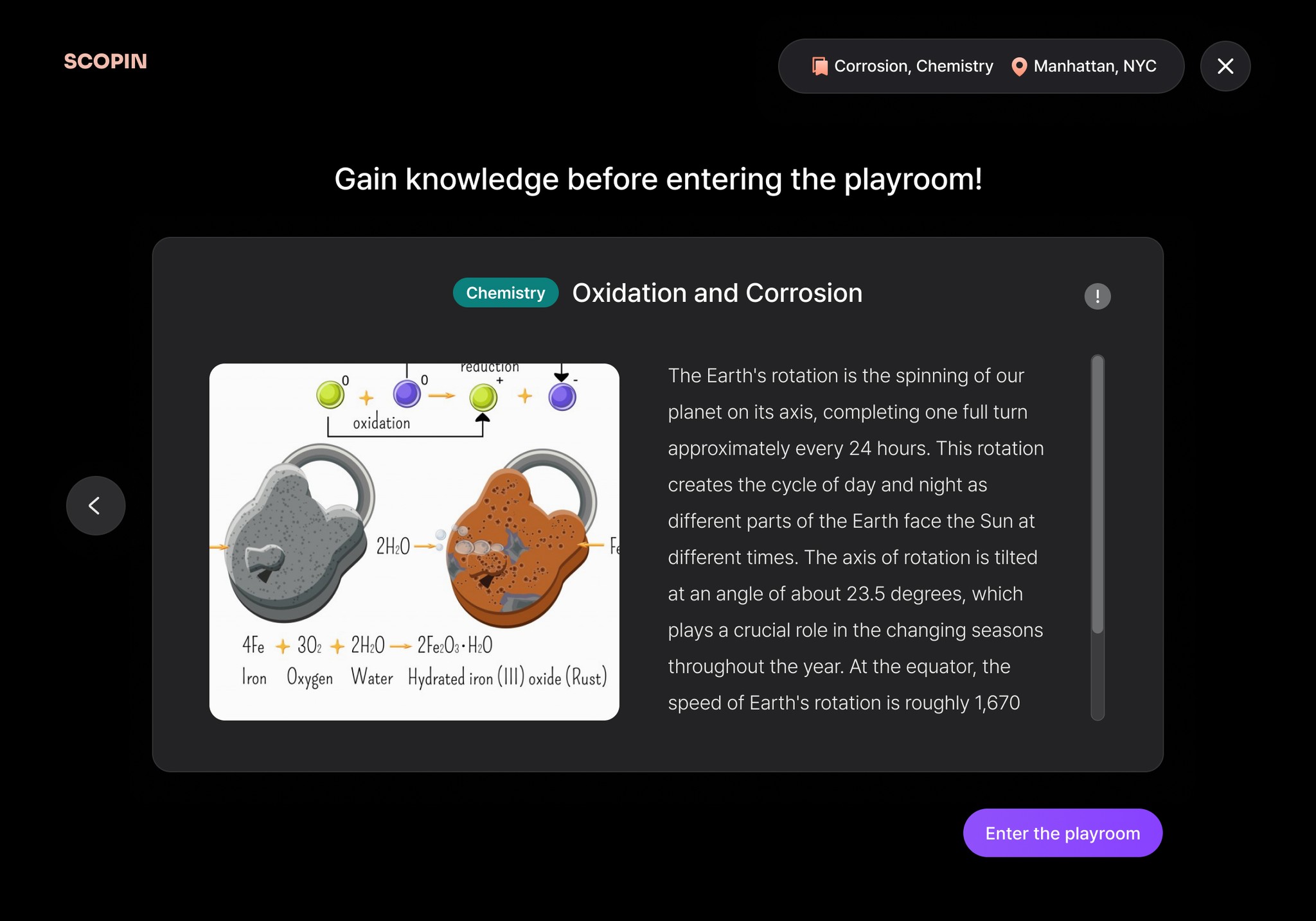
Before entering the playroom, you can gain knowledge. Additionally, you can adjust the difficulty level of the knowledge they acquire.
03-1
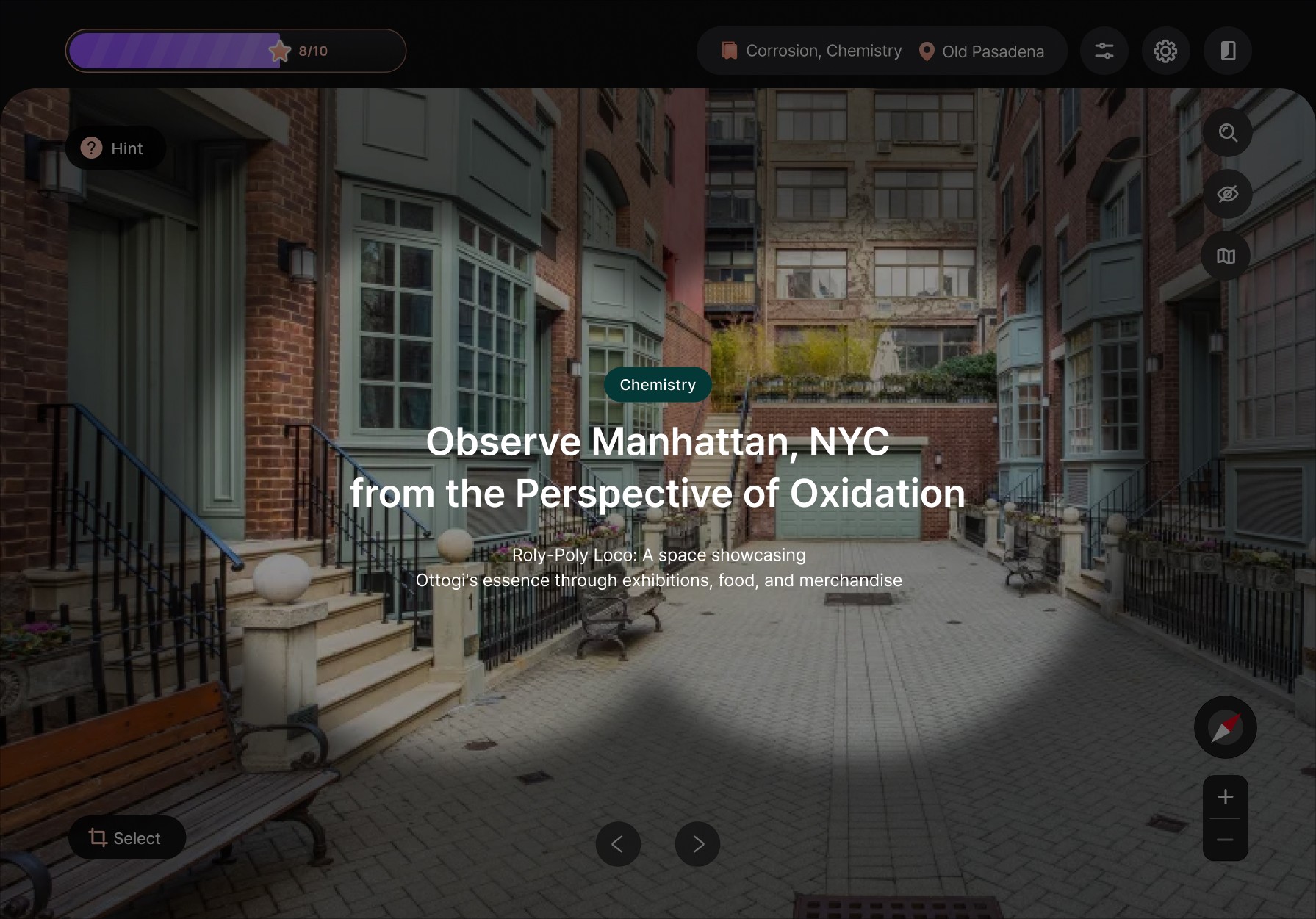
Enter the playroom,
a virtual map of reality
The everyday spaces used as the background can be created using virtual map, such as Google Maps.
03-2
Apply what you’ve learned to real life and internalize it
If you struggle to find new ideas, hints can guide you. It will ultimately help you not only internalize knowledge but also expand your understanding of the world.
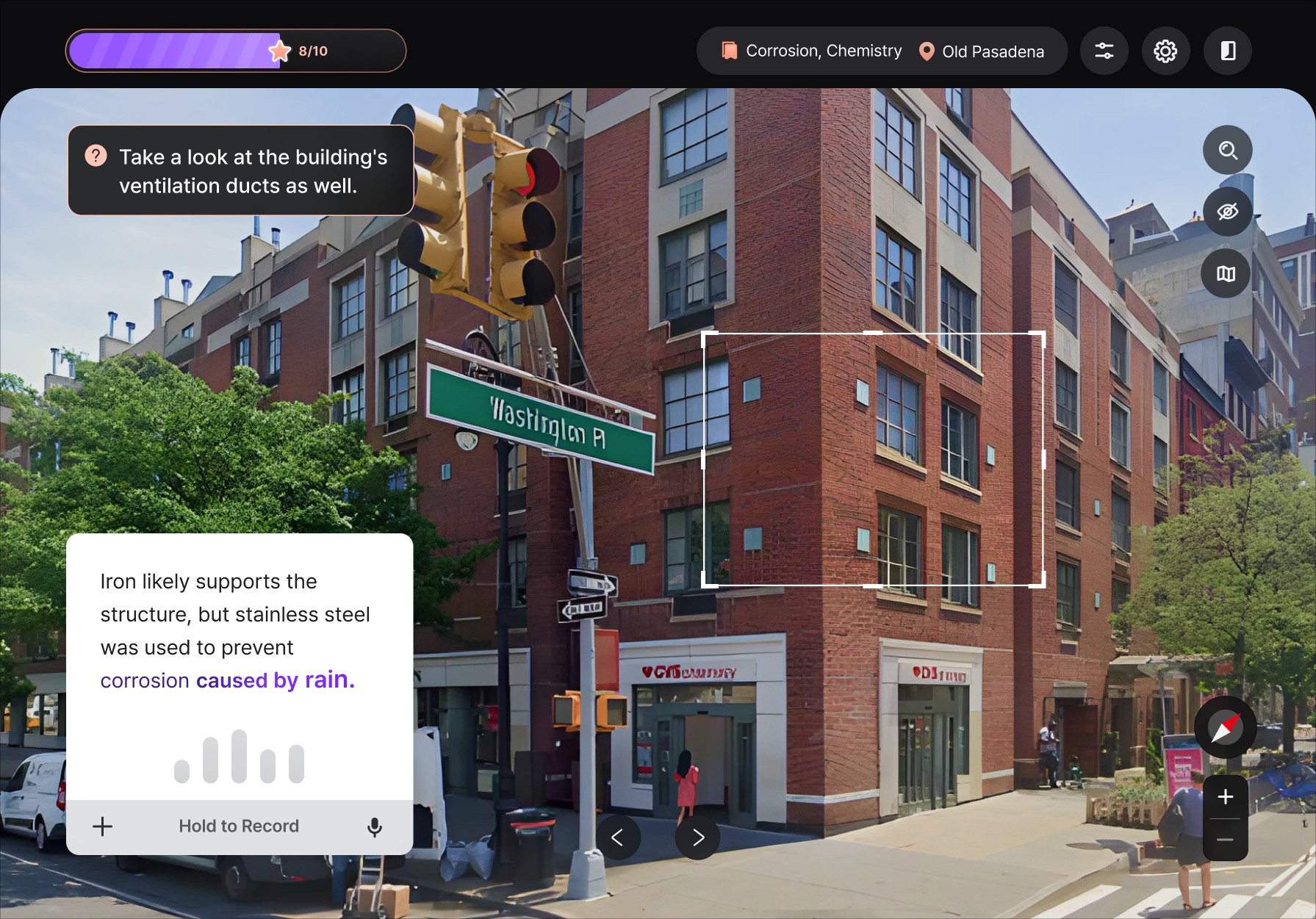
Hint
Users can get hints if they're stuck and record ideas in different ways.
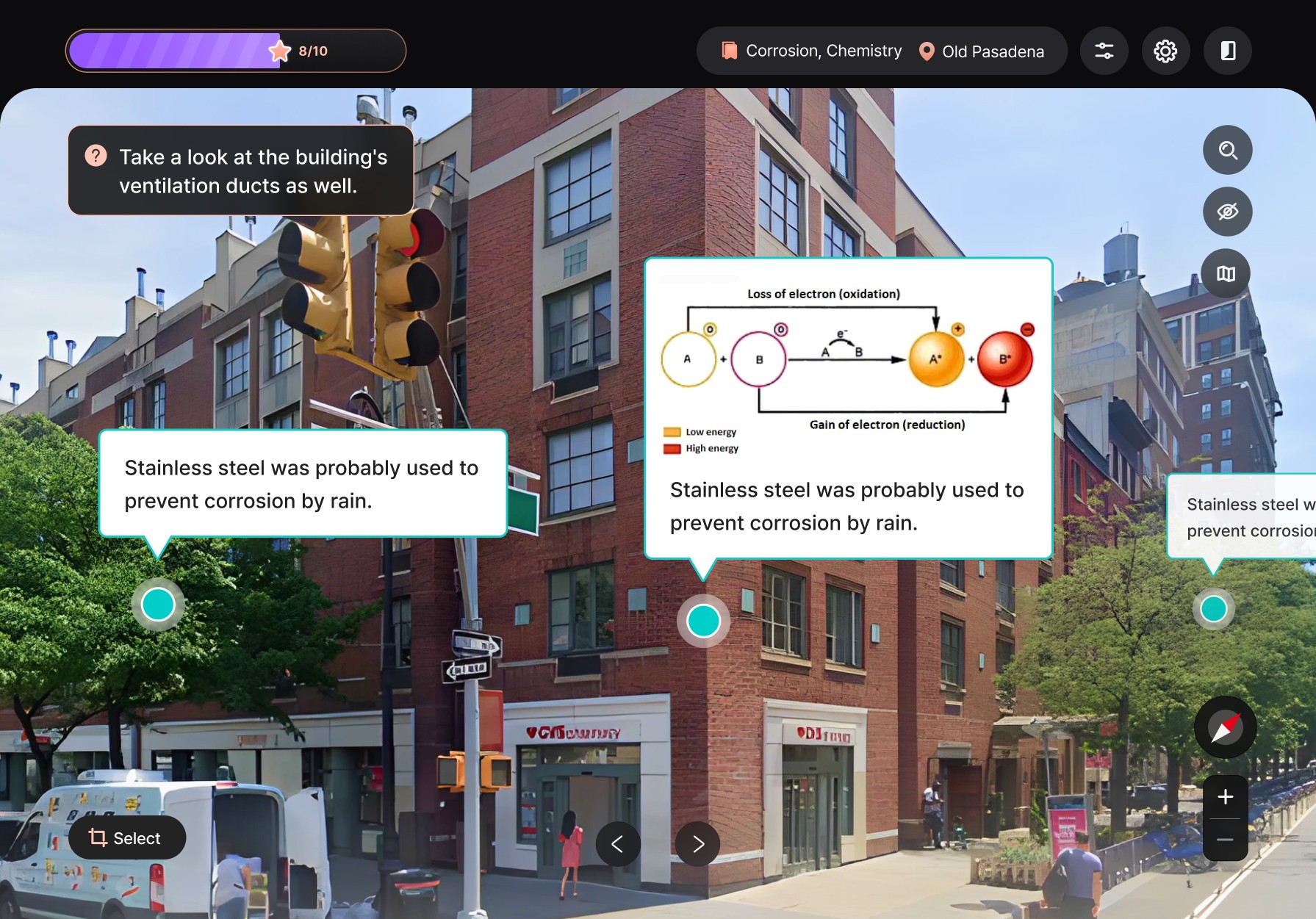
Recorded
After recording, ideas are displayed on the screen for users to revisit anytime.
04
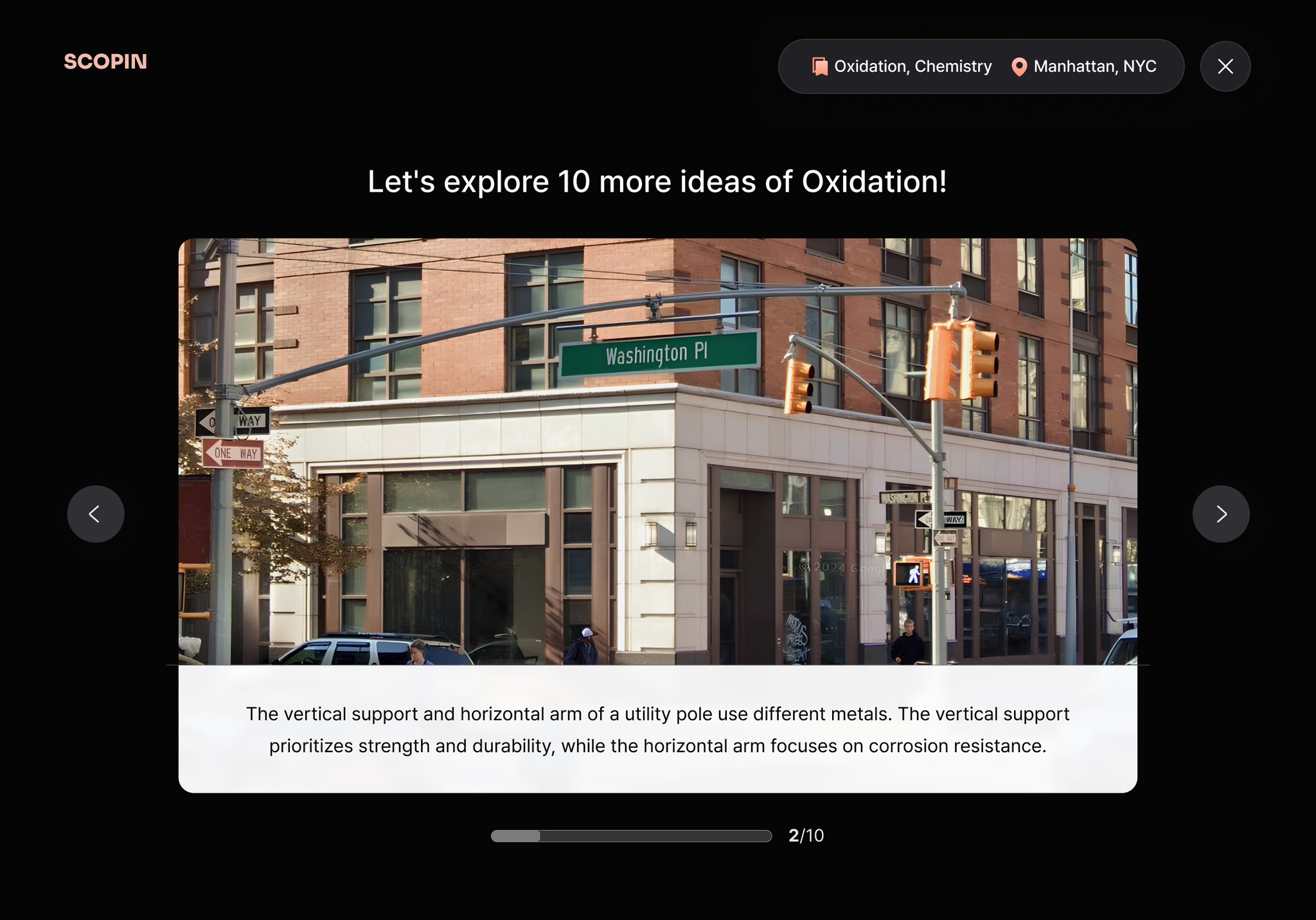
Revisit overlooked knowledge and broaden your perspective
After achieving the goal of gathering ideas, students can review the ideas they have collected along with new perspectives they might have missed. This provides users with an opportunity to incorporate new perspectives to expand their thinking.
Problem-Solving Process

CONTEXT
Learning from textbooks and lectures doesn't truly last.
Students learn knowledge from various fields at school, attending lessons from teachers and solving problems.
PERSONA
What's the problem with education?
I conducted in-depth interviews with 3 Influential users, a teacher and three parents, and 5 children to get insights.
Teacher
Teaching knowledge in various fields is to foster diverse thinking skills.
At school, teachers teach a variety of knowledge. The reason is to use this knowledge to cultivate interdisciplinary thinking in students. This leads to problem-solving and originality.
Parents
It’s hard for parents to understand how their children are learning.
Parents often don’t clearly understand what or how their children are learning, or which methods are most effective, so they send them to multiple private academies to provide as much education as possible.
Students
Students quickly forget theory-based content and struggle to apply it.
Students acquire a wide range of knowledge, but it often fades quickly and does not lead to an improvement in their diverse and integrated thinking skills.
PROBLEM
Textbook-based learning makes it difficult for students
to apply what they’ve learned in real-life situations.
SOLUTION
A virtual map to apply acquired knowledge in everyday life
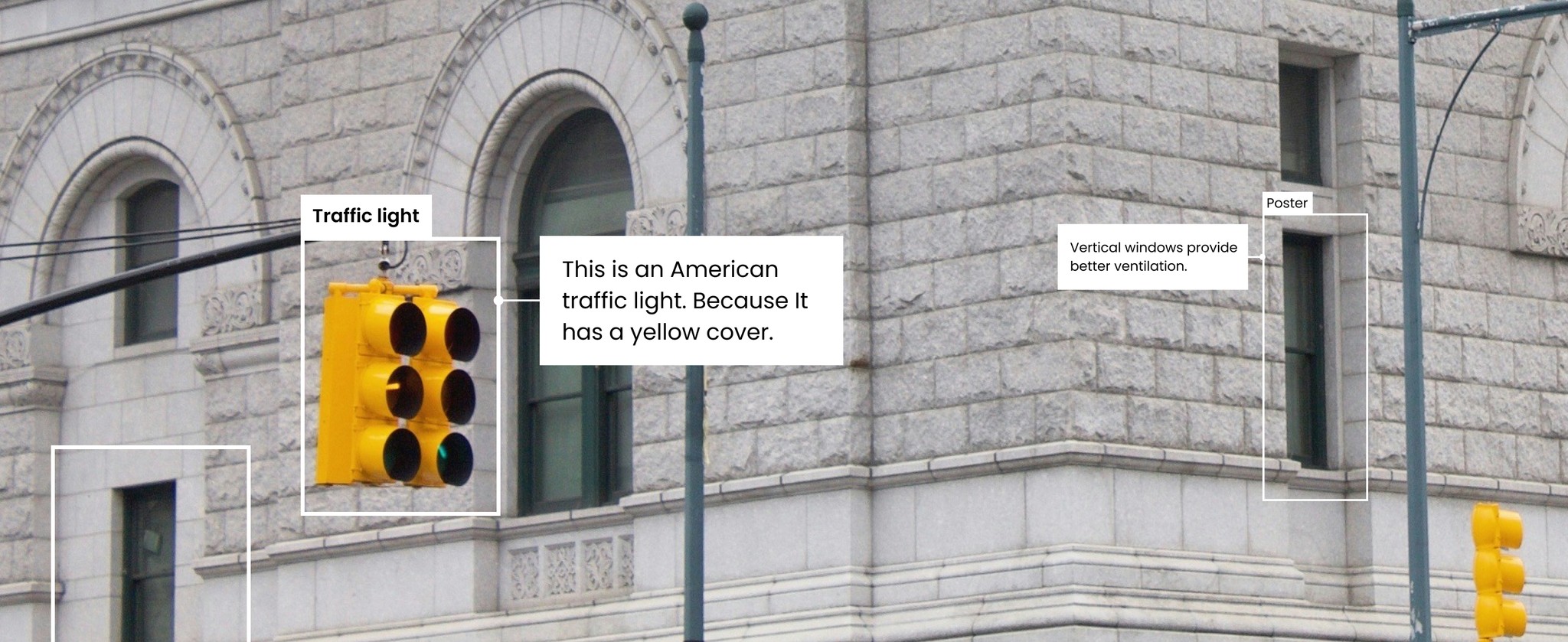
I decided to create Playrooms, a virtual map of reality, inspired by Google Street View. In Playrooms, users can apply newly acquired knowledge across various fields to everyday encounters. This assures that the online platform can help users broaden their understanding on the world.
DELIVER
Design Principles
01
Enjoyable
To encourage users to engage more actively in the learning process, the design should make the process of observing everyday encounters through fresh perspectives enjoyable.
02
Accessible
The design should be accessible to encourage users to engage in the learning process frequently. Ensuring the service is compatible with multiple devices could be effective.
03
Immersive
The design should create an immersive atmosphere that allows users to focus entirely on the learning process without distractions.
04
Focused on myself, but sharable
The design should create an environment that helps users concentrate on enhancing their own critical thinking while also broadening their perspectives by exploring others' ideas.
DELIVER
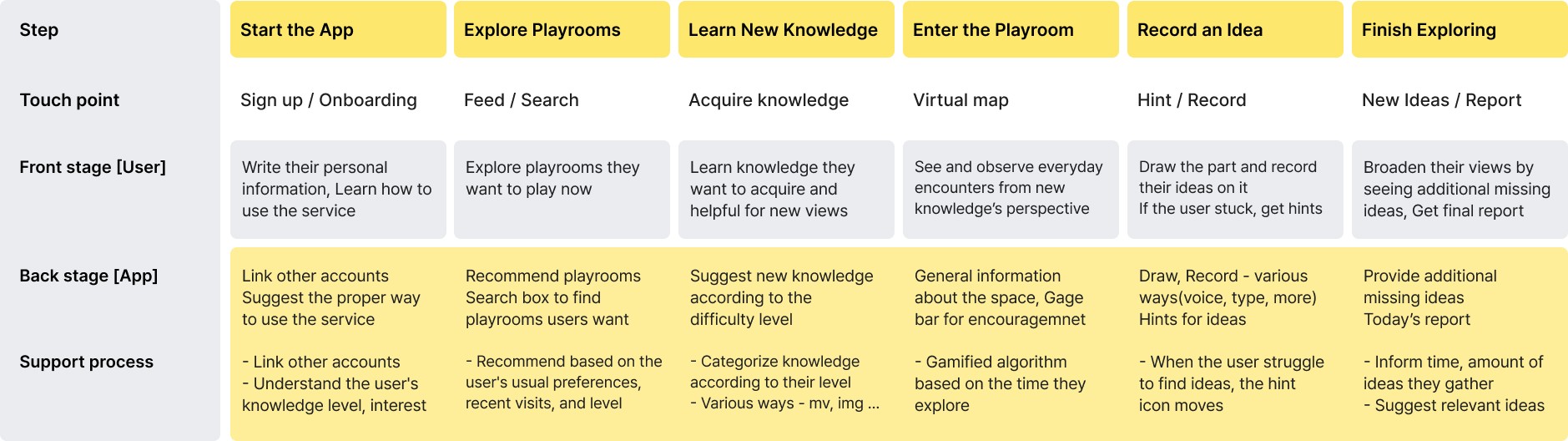
Service Blueprint
ITERATION
Usability Testing & Design Iteration
Through UT, I revised the app to make it less rigid like a typical learning app and more enjoyably and accessibly, like a streaming app.
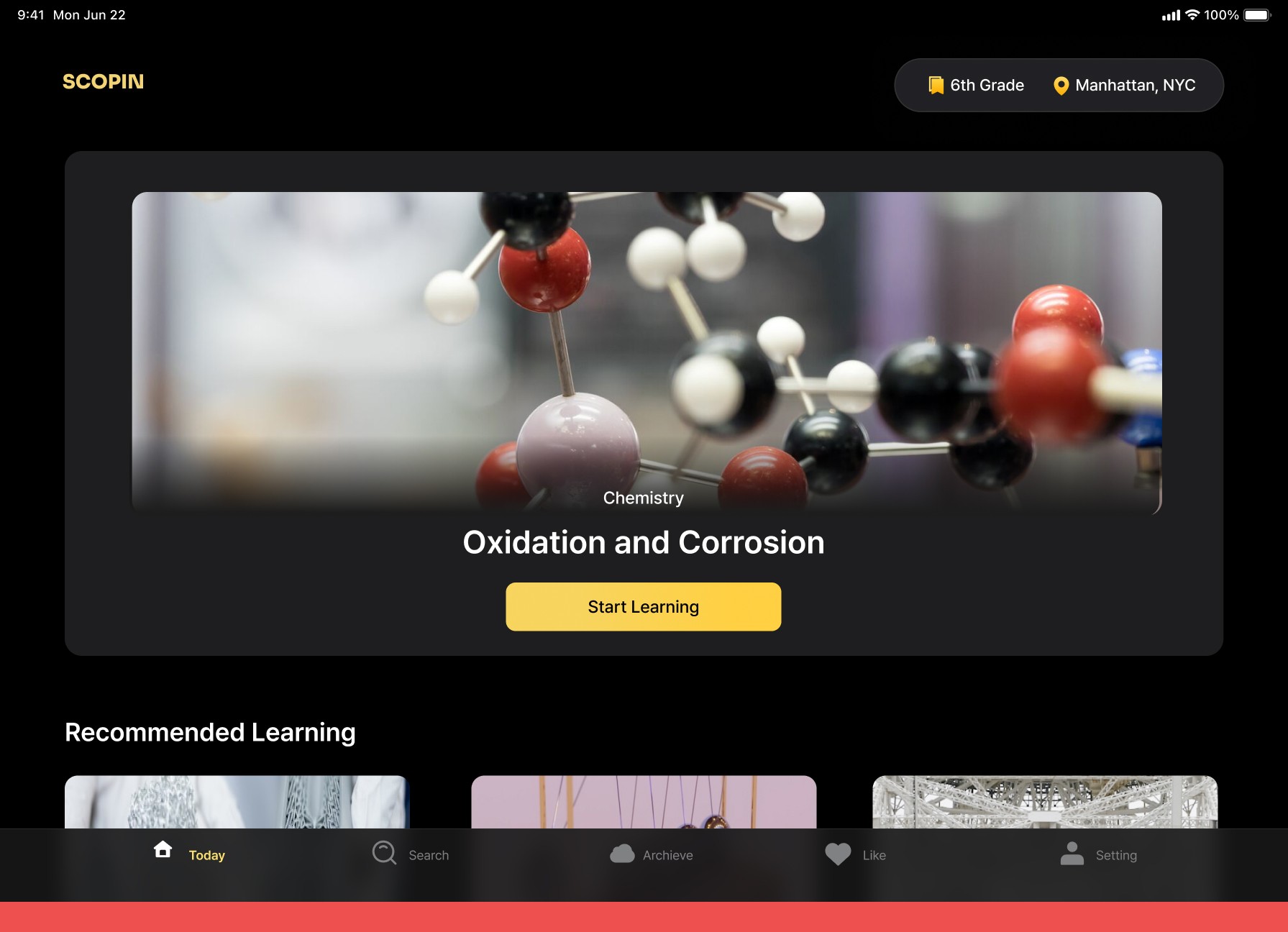
Before
People didn’t find the title about choosing what knowledge to gain particularly interesting.
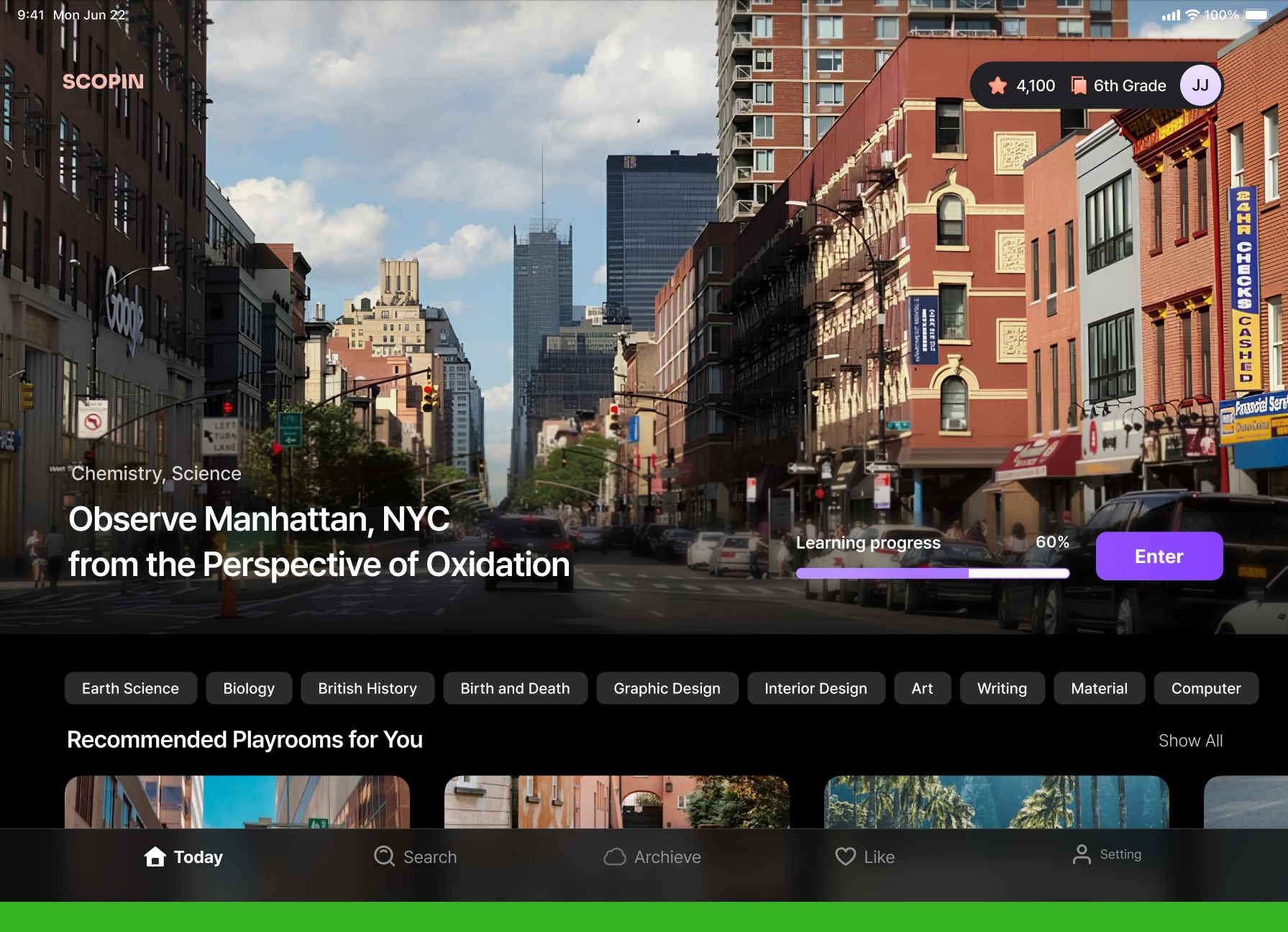
After
People didn’t find the title about choosing what knowledge to gain particularly interesting.
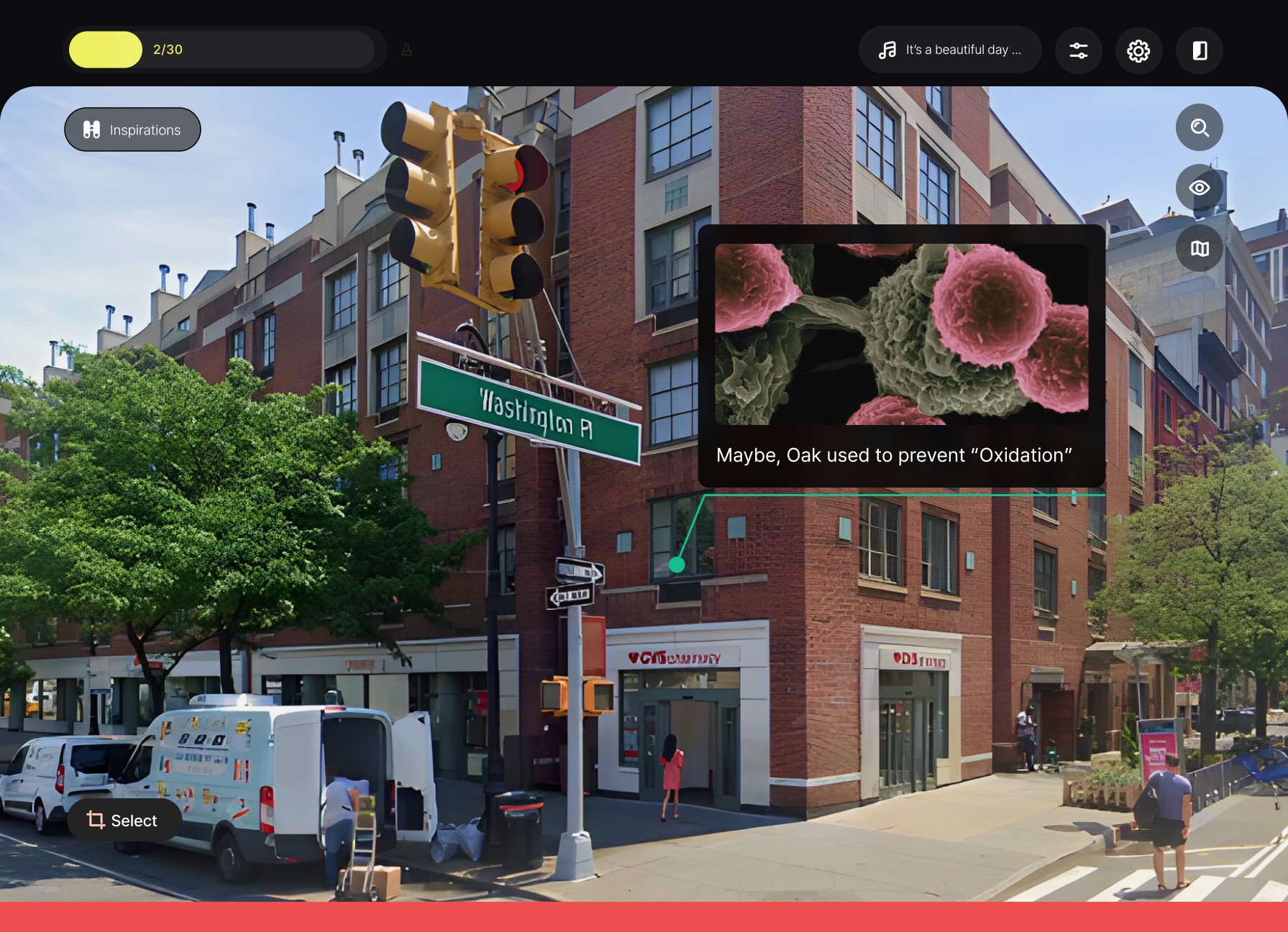
Before
Sometimes, students found it challenging to apply the knowledge they learned in the playroom and wanted hints.
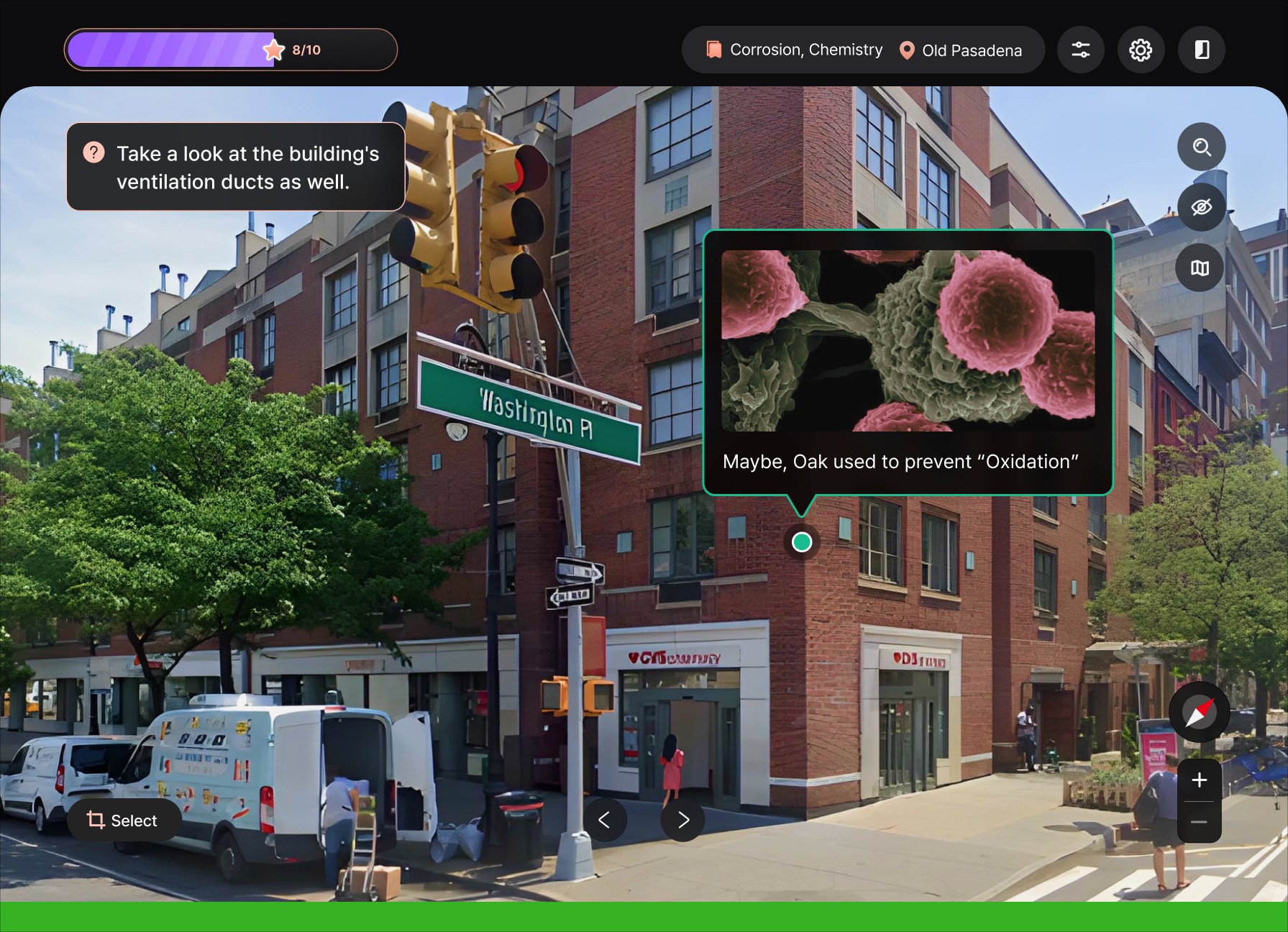
After
I made the UI colorful to boost students' motivation and replaced the collected inspirations on the left with hints.
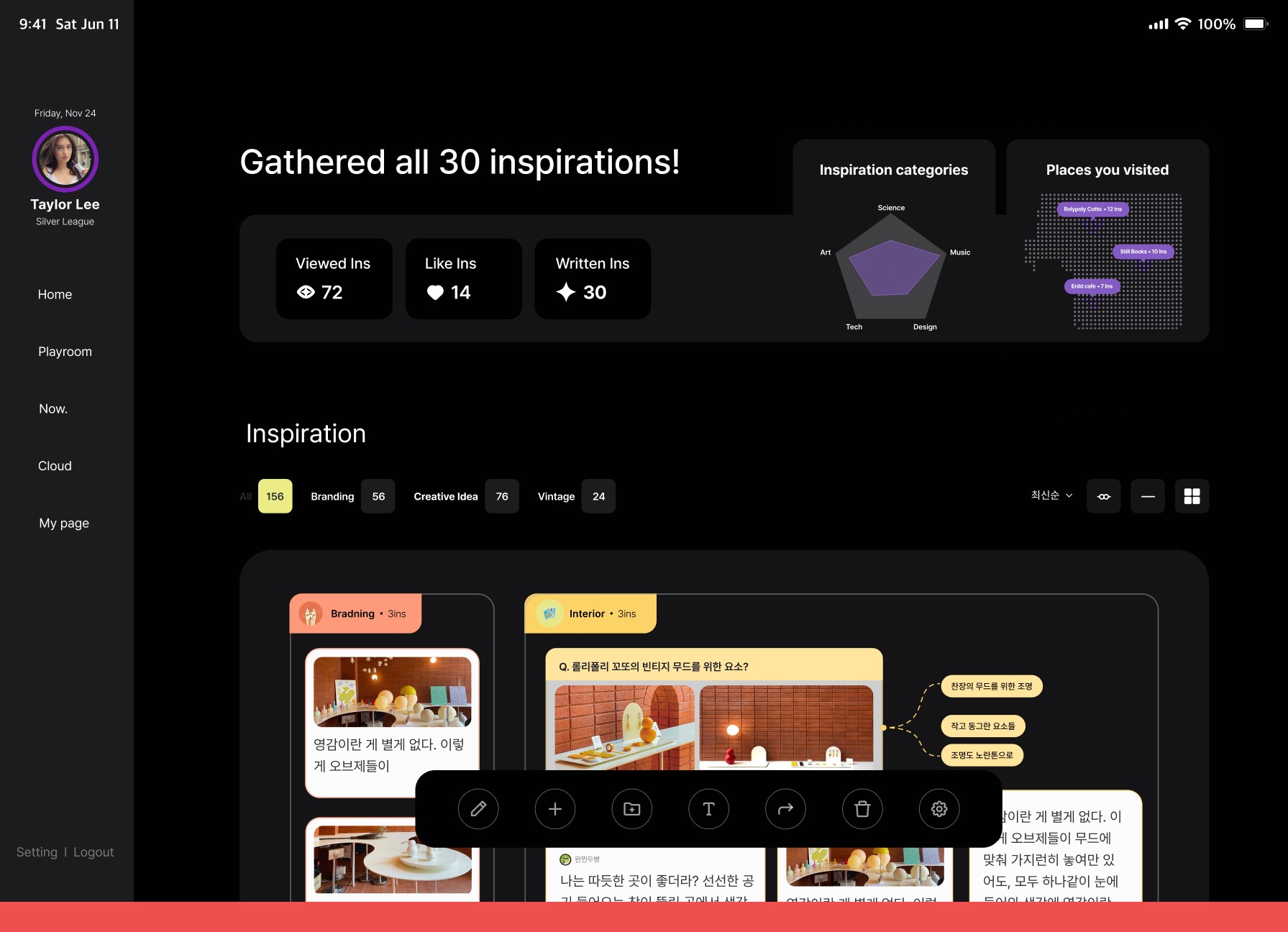
Before
Students completed their learning sessions, but they found it difficult to truly assess their progress.
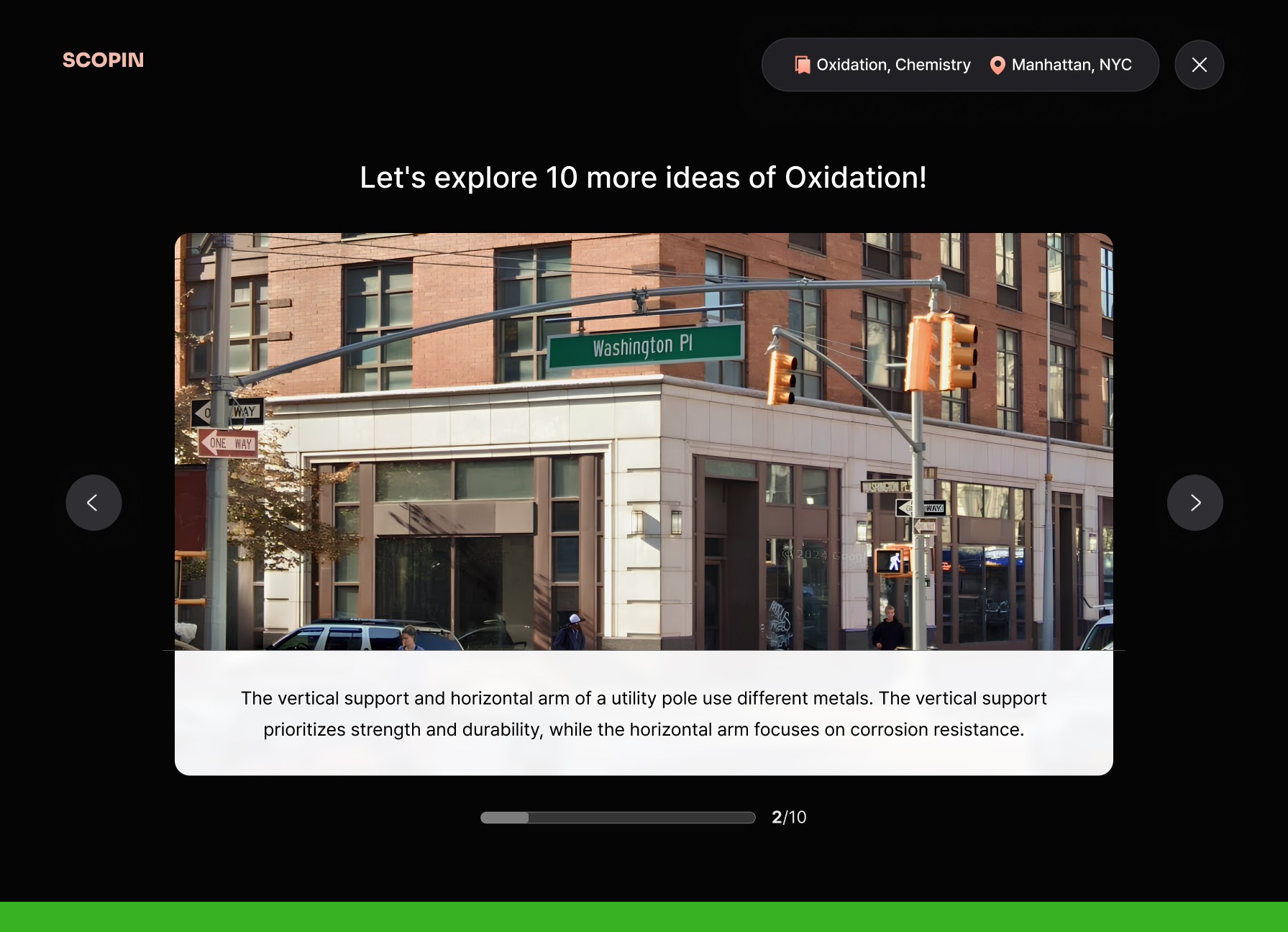
After
I added a feature that highlights the points users may have missed and displays them at the end.
What I've learned
Iteratively refining a problem definition
This project began with the theme of creativity. Through user interviews, I realized that schools teach various fields of knowledge to foster creativity. As I iteratively refined the design problem, I discovered that while knowledge is taught, it’s often challenging to apply. By narrowing the focus step by step, I was able to identify a clear, specific problem.
Setting a specific user group
I learned how data is interconnected across various Samsung Android devices and services. I also referenced Samsung One UI to design the design system, which helped me understand how a design system functions within an operating system.