Streamlining Ingredient
Management for Restaurateurs

Duration
4 months, 2025
Company
Buffr.ai
Team
2 Designers, 2 PMs, 2 ENGs
My Role
Founding Product Designer
Co-led UX/UI design and prototyping, collaborating closely with PMs and engineers to implement AI-driven data logic and visualizations that reflected real restaurant operations and PM insights.
Deliverables
Web UI Design, Wireframing, Prototyping, Branding Guideline
The Challenge
AI-powered inventory management platform centralizing tracking and delivering actionable insights for restaurateurs.

01
Welcoming and simple
email login flow
To make onboarding more accessible, we integrated users’ existing email accounts, such as Gmail and Apple Mail, into the login flow. Users can also create a Shandi email if they prefer.

02
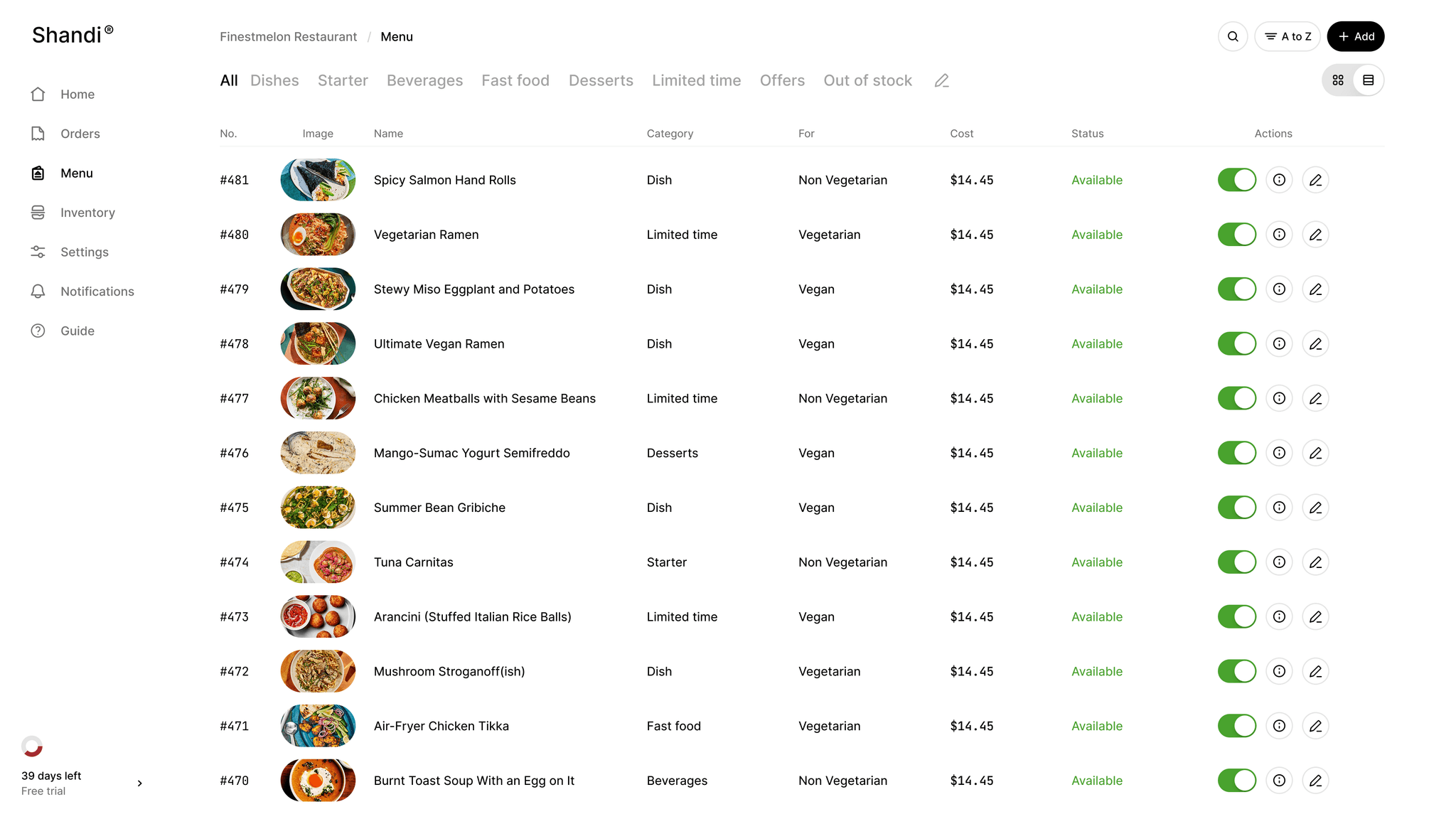
Intuitive menu management flow with a minimal design
To create a more intuitive flow, I kept only the essential elements on the main screen and moved
\secondary features into interactive screens. Users can easily add and edit their menu items.
Grid View for intuitive menu management.

Table View to view the entire menu at a glance.
03
AI automatically tracks and updates inventory in real time as customer orders come in
To reduce manual inventory management, we introduced AI-powered inventory tracking that automatically updates stock levels in real time as customer orders come in.
04
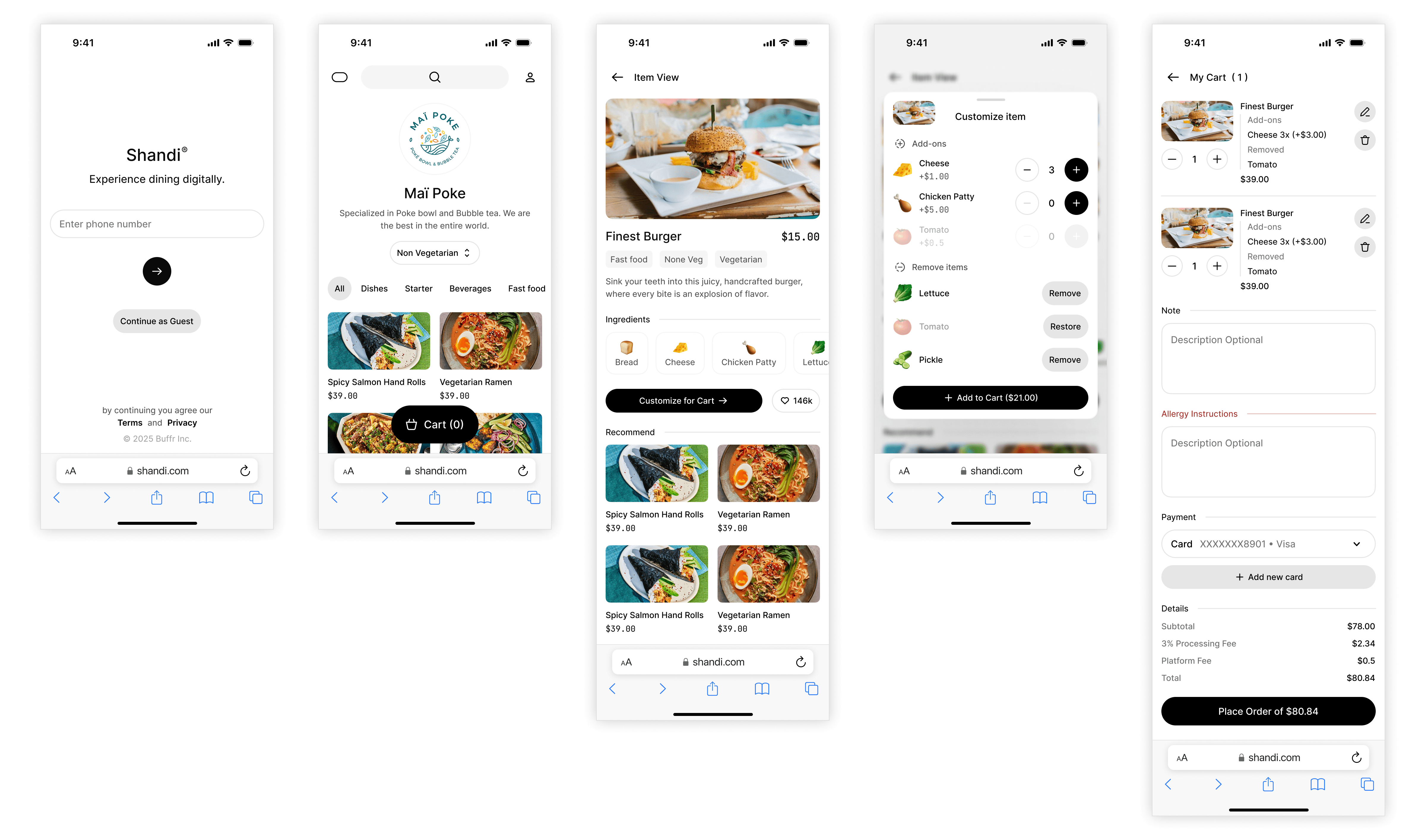
Mobile-web Customer Order Flow
Customers can place orders by scanning a QR code at the restaurant and accessing a mobile web app.
By simply entering their email address during checkout, they can create an account to receive ongoing benefits,
while also enabling restaurant staff to better manage and engage with their customers.
Request Details
More details are coming soon. Get in touch to learn more.
jiwonjang.design@gmail.com
Key Learnings
Structuring AI Algorithms
Because a single inventory item affected multiple menus, I learned the importance of building a consistent underlying structure. By collaborating with engineers, I mapped how data functioned and connected across the system.
Rapid Prototyping in an early-startup
Working in a fast-paced startup environment, I focused on quickly turning ideas into prototypes and refining them through continuous iteration and feedback with engineers.
Internal A/B Testing
In an early-stage MVP environment with limited real users, I learned the value of internal A/B testing to challenge assumptions, maintain objectivity, and improve the product through iteration.